

Your software stays available – at all times
Trust is good. Access is better.
Provider insolvent – code unreachable

Software Downtime? Business Risk!
Chaos in Escrow Releases
Provider insolvent – code unreachable
Software Downtime? Business Risk!
Chaos in Escrow Releases
guaranteed access.
on:mint secures it.
Digital Escrow
Case Study: From Safeguarding to Business Continuity
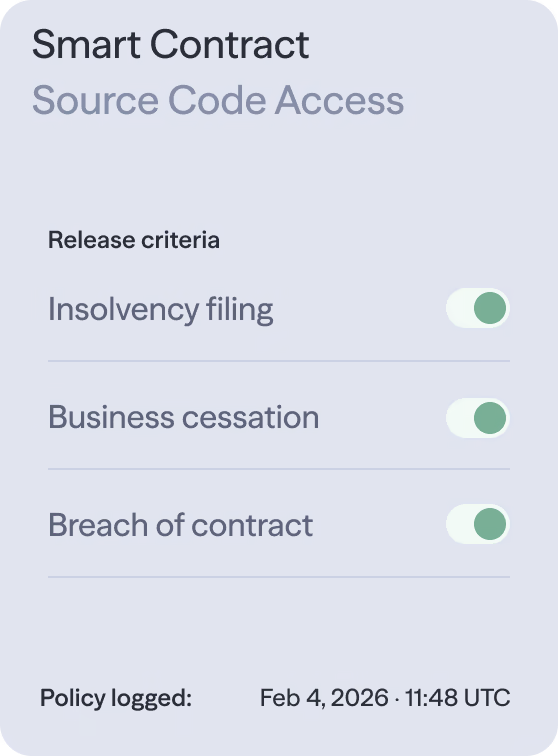
01
Legally secure setup & contract
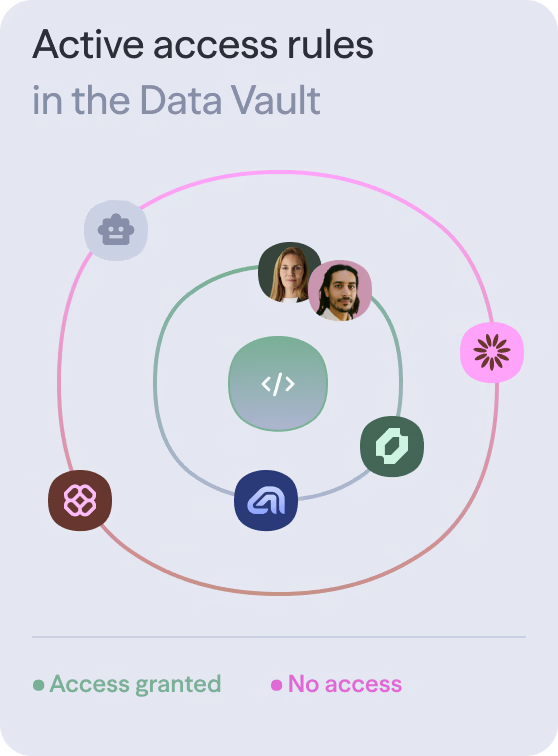
02
Blockchain-secured data space
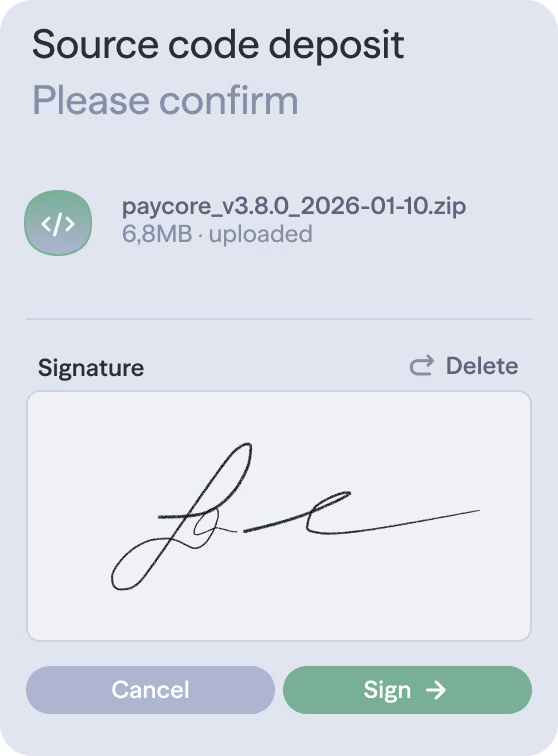
03
Deposit & digital contract execution
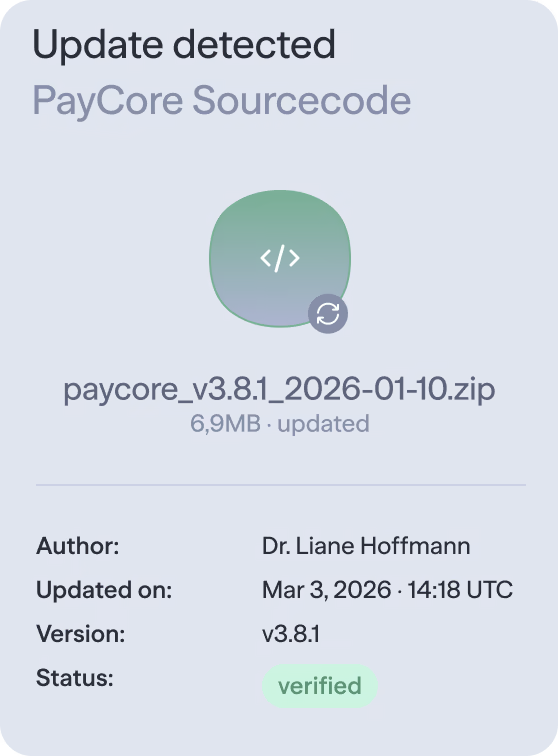
04
Updates & controlled release
• Use Cases
How on:mint protects your critical technologies
For Software Users
For Software Vendors
For Investors & Banks
• Before / After
Control instead of loss of control
• SECURE ACCESS NOW
Protect your critical technologies

FAQs
What is Digital Escrow at on:mint and which problem does it solve?
Digital Escrow at on:mint secures business-critical digital assets such as source code in an insolvency-proof, audit-ready, and technically verifiable manner.
The product addresses key risks in modern technology projects:
- insolvency or failure of software and technology partners
- blocked access to source code or intellectual property
- project, development, or production downtime
lack of legal and technical safeguards for customers, investors, and public-sector clients
on:mint combines digital deposit, decentralized storage technology, and attorney-drafted escrow agreements into a robust foundation for business continuity.
Is the escrow digital or physical?
on:mint provides a fully digital escrow model.
Compared to traditional physical escrow solutions, the digital approach offers significantly greater transparency, up-to-dateness, verifiability, and resilience.
Where are the escrow assets stored?
Escrow assets are stored in a gated IPFS vault operated exclusively on EU-hosted infrastructure.
The IPFS software runs on servers provided by Scaleway and IONOS.
The middleware responsible for data transfer is also hosted within the EU via Scaleway.
No transfers to third countries take place.
The architecture is decentralized, avoids single points of failure, and provides high operational resilience.
How are the deposited assets technically protected?
on:mint uses several combined protection mechanisms:
- Token-gated access: access is limited to contractually authorized parties and enforced through a token-based permission model
- Content-based addressing: each file is uniquely identified by its content
- Blockchain anchoring: every deposit is immutably documented
- Decentralized storage: no dependency on a single server
Only the cryptographic hash is stored on the blockchain, not the content itself.
The assets remain fully confidential at all times.
How is it ensured that the correct version is always deposited?
on:mint uses inherent versioning.
Any change to a deposited asset:
- automatically generates a new hash
- is documented in an audit-proof manner
- is clearly traceable in time
This makes it provable at any point:
- which version was deposited
- when it was deposited
- whether the content has changed
Manual updates are possible at any time.
A direct GitHub integration for automated synchronization is planned and will be available from mid-Q2 2026.
When and how is access to the escrow assets granted?
Access to escrow assets is granted exclusively upon the occurrence of contractually defined release criteria.
Typical trigger events include:
- insolvency
- prolonged support failure
- breach of contract
- loss of key personnel, such as brain drain
Release is:
- legally defined
- technically enforced
- limited to authorized parties only
Tiered access rights, such as read-only access, can be defined individually.
How does the setup of Digital Escrow work and how long does it take?
The process is clearly structured and can typically be completed within a few days up to three weeks, depending on complexity.
Process:
- Joint definition of the desired setup and release logic
- Drafting of an individually tailored, insolvency-proof escrow agreement
- Setup of a dedicated tenant on the on:mint platform
- Onboarding session, approximately 30 minutes
- Initial asset deposit, approximately 30 minutes
The escrow agreements are drafted by Schürmann Rosenthal Dreyer (SRD), a renowned German technology and IT law boutique.
Are code audits or additional services available?
A plausibility check of the deposited materials is included by default.
Comprehensive technical or functional verifications, such as build or full verification, can be arranged as optional services and are subject to additional fees.